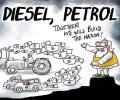
Petrol and diesel prices are unlikely to be increased despite firming raw material costs because of upcoming general elections next year, Moody's Investors Service said. Three state-owned fuel retailers -- Indian Oil Corporation (IOC), Bharat Petroleum Corporation Ltd (BPCL) and Hindustan Petroleum Corporation Ltd (HPCL) -- which control roughly 90 per cent of the market, have kept petrol and diesel prices on freeze for a record 18 months in a row. This is despite the raw material (crude oil) cost surging last year, leading to heavy losses in first half of 2022-23 fiscal year before easing oil prices propelled them to profitability.

With digital adoption fast gaining currency, India is likely to see retail digital payments double to $7 trillion by 2030 from current levels, a study by Kearney and Amazon Pay said. In the report 'How Urban India Pays', Kearney-Amazon Pay said strong adoption of digital payments in online purchases has potentially led to a permanent shift in consumer behaviours, fuelling offline adoption as well.
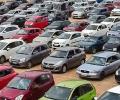
Automobile retail sales in India increased by 37 per cent in April on a low base of COVID-hit April last year, automobile dealers' body FADA said on Thursday. Total sales across categories rose to 16,27,975 units in April, as compared to 11,87,771 units in the year-ago period. On a year-on-year basis, all vehicle categories including passenger vehicles and two-wheelers were up as compared with April last year.

These 10 stocks represent the best mix of value and growth, offering relatively low price-to-earnings and price-to-book ratios, a high return on equity, and sufficiently high potential from current levels.
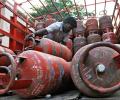
Cooking gas LPG price on Wednesday was hiked by Rs 15 per cylinder in line with a surge in international fuel prices. Rates of both subsidised and non-subsidised LPG prices were hiked, oil company officials said. Cooking gas now costs Rs 899.50 per cylinder in Delhi.

Dealers are not happy with the company's latest retailing policy and decided not to re-open their pumps.

After missing two self-imposed deadlines, billionaire Mukesh Ambani's Reliance Industries Ltd on Friday announced recalibration of a proposed $15 billion deal to sell 20 per cent stake in its oil refinery and petrochemical business to Saudi Aramco, saying the two firms have agreed to re-evaluate the proposed investment in light of the Indian firm's new energy forays. The stake sale talks, which were first officially revealed in August 2019, are being reset in light of Reliance making forays into new energy business in recent months by investing $10 billion in alternative energy over three years. To pivot to green energy, it has already bought a German maker of photovoltaic solar wafers and signed a deal with a Danish company to manufacture hydrogen electrolysers in India.
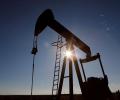
A fall in crude oil price and Aramco's $75 billion annual dividend commitment may have delayed Saudi company picking a stake in Reliance Industries Ltd's oil-to-chemical unit (O2C), research firm Jefferies said. Richest Indian Mukesh Ambani had in August 2019 announced talks for the sale of a 20 per cent stake in the O2C business, which comprises its twin oil refineries at Jamnagar in Gujarat and petrochemical assets, to the world's largest oil exporter. The deal was to conclude by March 2020 but has been delayed for reasons not disclosed by either company.
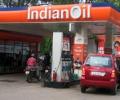
State-owned fuel retailers, which last week raised petrol price by Rs 1.80 per litre, reported a net loss of over Rs 8,000 crore (Rs 80 billion) in July-September quarter and are borrowing heavily to even buy crude oil.

IOC along with HPCL and BPCL took a hit of about Rs 4,500 crore from absorbing Re 1 a litre hike.
Weighed down by the oil-to-chemicals (O2C) business, Reliance Industries (RIL) results for the April-June quarter (Q1) of 2024-25 (FY25) missed Street estimates. A 14 per cent fall in the O2C segment's operating profit compared to the year-ago quarter and a 22 per cent sequential decline pulled down the consolidated performance. The O2C segment accounts for a third of the overall operating profit and about 60 per cent of the attributable consolidated profit.
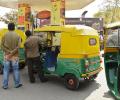
The government has slashed by up to a fifth the supplies of cheaper gas to city gas entities that retail CNG to automobiles, increasing their dependence in costly imported fuel. Buying costly imported gas to make up for the shortfall should result in a hike in CNG price but given the ensuing assembly elections in Maharashtra, that may be put off for now. Indraprastha Gas Ltd and Mahanagar Gas Ltd in regulatory filings stated that supplies of domestically produced gas, which was available at a capped rate which is half of the imported price, has been cut.

The government-owned Fortune 500 company, which is the country's largest company in terms of sales, has already commissioned 1,180 Kisan Sewa Kendras.

They were shut when PSUs were selling heavily subsidised fuel; will reopen now, buoyed by diesel decontrol
Company in talks with Reliance Capital, Apollo Pharmacy to offer new services at outlets.

Fuel retailers sell diesel, domestic LPG and kerosene at government controlled rates which are below market price. The loss they thus incur is made good through cash subsidy from the government and dole from upstream firms like Oil and Natural Gas Corporation.
The government wants to use the FDI victory impetus to clear the Companies Bill and those amending the banking and pension Acts.
The government on Monday approved Rs 8,000 crore (Rs 80 billion) in cash subsidy to state-owned fuel retailers to make up for half of the revenues they lost on selling diesel, domestic LPG and kerosene below cost in the third quarter.
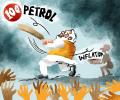
Petrol and diesel prices were on Wednesday hiked by 80 paise a litre each, taking the total increase in rates in the last nine days to Rs 5.60 per litre. Petrol in Delhi will now cost Rs 101.01 per litre as against Rs 100.21 previously while diesel rates have gone up from Rs 91.47 per litre to Rs 92.27 according to a price notification of state fuel retailers. Rates have been increased across the country and vary from state to state depending upon the incidence of local taxation.

This is the second hike in diesel price this month.
An increasing number of contractors managing parking lots at malls, multiplexes and five-star hotels are buying parking insurance covers

Reliance Industries will sell 20 per cent stake in its oil and chemicals business to Saudi oil giant Aramco for about $ 15 billion and nearly half of its fuel retail business to BP of UK for Rs 7,000 crore. Aramco, the world's biggest crude exporter, will also supply Reliance's twin-refineries at Jamnagar in Gujarat with 7,00,000 barrels of oil a day on a long-term basis, Ambani said.
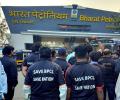
The divestment of Bharat Petroleum Corporation (BPCL) may hit a fuel price hurdle, according to officials dealing with the matter. They pointed out that the inconspicuous administered price regime could hamper the prospects for potential buyers of BPCL. A senior oil ministry official said public-sector oil-marketing companies (OMCs) take a hit when they sell petrol, diesel, and liquefied petroleum gas (LPG), three of the most popular petroleum products in the country.
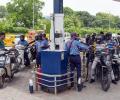
Petrol and diesel price hikes are likely to resume after state elections get over next week to bridge the Rs 9 a litre gap created by international oil prices soaring past $100 a barrel. International crude oil prices shot above $110 a barrel for the first time since mid-2014 on fears that oil and gas supplies from energy giant Russia could be disrupted, either by the conflict in Ukraine or retaliatory western sanctions. The basket of crude oil India buys rose above $102 per barrel on March 1, the highest since August 2014, according to information from the Petroleum Planning and Analysis Cell (PPAC) of the oil ministry.
Domestic passenger vehicle retail sales in March declined by 4.87 per cent to 271,358 units, as compared to the same month last year, automobile dealers' body FADA said on Tuesday. According to the Federation of Automobile Dealers Associations (FADA), PV sales stood at 285,240 units in March 2021. "Passenger vehicles continue to see high demand and long waiting periods as semiconductor availability still remains a challenge, even though supplies slightly improved from previous month," FADA president Vinkesh Gulati noted.
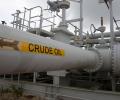
Retail inflation hit an eight-month high of 6.07 per cent in February, remaining above the RBI's comfort level for the second month in a row, while wholesale price-based inflation soared to 13.11 per cent on account of hardening of crude oil and non-food item prices, government data showed on Monday. The previous high for retail inflation was 6.26 per cent in June 2021. The consumer price index (CPI) based retail inflation, which is taken into account by the Reserve Bank of India (RBI) while deciding its monetary policy, rose mainly because of costlier food items, as per the data released by the National Statistical Office (NSO).
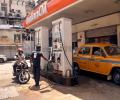
Petrol and diesel prices on Tuesday were hiked for the sixth time this month, propelling prices to cross the Rs 100-a-litre-mark in places from Nanded in Maharashtra to Rewa in Madhya Pradesh to Jaisalmer in Rajasthan. Petrol price was hiked by 27 paise a litre and diesel by 30 paise per litre, according to a price notification by state-owned fuel retailers. The increase took petrol and diesel prices to their highest-ever level across the country. In Delhi, petrol now comes for Rs 91.80 per litre and diesel is priced at Rs 82.36.

The oil crisis could not have come at a worse time for the Modi government as its tax collection has fallen short of its 2020-2021 target by Rs 5.2 lakh crore.

Jet fuel prices on Wednesday were cut by 1.3 per cent -- the first reduction after 10 rounds of price hikes -- on softening international crude oil rates. Simultaneously, prices of commercial LPG - used by business establishments such as hotels and restaurants - were reduced by Rs 135 per 19-kg cylinder. The price of aviation turbine fuel (ATF) -- the fuel that helps aeroplanes fly -- has been reduced by Rs 1,563.97 per kilolitre, or 1.27 per cent, to Rs 1,21,475.74 per kl (Rs 121 per litre) in the national capital, according to a price notification of state-owned fuel retailers.

Even as regulatory focus has zeroed in on foreign e-commerce giant Amazon, a domestic retail giant has been created almost below the radar in Reliance Retail (RR), one of the most crucial businesses for the group's future. From doorstep delivery of groceries, apparels to branded jewellery, medicines, toys, furniture to high street retailing, RR's presence in the world's fourth largest consumer market is just one part of the story.
Automobile manufacturers said Euro-VI grade vehicles will not hit the roads before 2020 but the advancement gives them confidence to make investments in manufacturing such vehicles.

Only investors with knowledge of cryptocurrencies, long-term conviction, and a long horizon should invest in this asset class.

Even as the high inflation figure for October has ruled out any possibility of a rate cut by the Reserve Bank of India's (RBI's) monetary policy committee (MPC) in December, a rate cut in February also looks uncertain due to global uncertainties. Economists told Business Standard that unless domestic growth slows markedly, the outlook on rate cut remains unclear. India's headline inflation touched a 14-month high of 6.2 per cent in October, breaching the MPC's upper tolerance band of 6 per cent.

Subdued prices of food items like vegetables pulled down retail inflation for the third month in a row to 5.3 per cent in August, within the RBI's comfort zone. While the Consumer Price Index (CPI)-based retail inflation declined to 5.3 per cent in August from 6.69 per cent in the same month a year ago, food inflation dipped at a much faster pace to 3.11 per cent from 9.05 per cent in August 2020. The food inflation was also lower than 3.96 per cent in preceding month of July.

'I wonder if they will keep it up after the elections.' 'I fear they'll start questioning eligibility -- income, age, bank accounts -- and eventually stop the scheme altogether.'

India Inc continued to grapple with muted revenue growth in the September 2024 quarter (Q2FY25) and witnessed a decline in margins and profits. The headwinds were especially severe for non-financial companies, while banking, financial services, and insurance (BFSI) firms significantly outpaced the rest of the corporate sector. The total profit of 1,353 listed companies that have released their Q2FY25 results thus far dropped by 0.6 per cent year-on-year (Y-o-Y) - the first cumulative earnings decline in eight quarters.
Petrol price on Monday neared Rs 100-a-litre mark in the national capital after the rate was hiked yet again. Petrol price was increased by 35 paise per litre while there was no change in diesel rates, according to a price notification from state-owned fuel retailers. In Delhi, the petrol price soared to Rs 99.86 per litre. Diesel rates were unchanged at Rs 89.36.
Petrol and diesel prices on Monday were hiked for the seventh day in a row as a rally in international oil prices took retail rates in India to new highs. Petrol price was increased by 26 paise per litre and diesel by 29 paise, according to a price notification of state-owned fuel retailers. This pushed retail rates, which differ from state to state depending on the incidence of local sales tax or VAT and freight charges, to their highest level. The hike took petrol price in Delhi to a record Rs 88.99 per litre and to a highest-ever rate of Rs 95.46 a litre in Mumbai.

'The private sector believes that some enablers in labour-intensive sectors like apparel, toys, tourism, and media retail, can unlock a lot of jobs.'

Aided by robust demand, automobile retail sales in India rose by 11 per cent last year as compared to 2022, dealers' body FADA said on Monday. The overall domestic automobile retail sales stood at 2,38,67,990 units in the 2023 calendar year as compared to 2,14,92,324 units in 2022. Passenger vehicle sales stood at 38,60,268 units last year, up 11 per cent from 34,89,953 units in 2022.
